


How to Help Elderly Parents Stay Independent at Home: What Actually Works
The conversation usually starts with a worry. Maybe you noticed your mother holding the wall when she walks down the hallway. Maybe your father mentioned he almost slipped getting out of the shower — and almost is the word that keeps repeating in your mind. Maybe there has already been a fall, and you are now dealing with both the aftermath and the fear of what happens next.
The desire to keep elderly parents safe and independent at home is one of the most universal experiences of adult children — and one of the most emotionally complex. You want them to maintain their dignity, their routines, and their freedom. You also want them to be safe. And you are looking for the thing that actually bridges those two needs — not a nursing facility, not constant supervision, but something that modifies the home itself so that staying in it is genuinely safer.
At Active Homes — Aging in Place Mods, we are certified aging in place specialists serving Los Angeles County. We have helped hundreds of families make this transition — from worry and uncertainty to a concrete plan and a safer home. This post covers what actually helps elderly parents stay independent at home, how to recognize the signs that modifications are needed, and what the professional process of making those modifications looks like.
Aging at Home — The Stakes
90% Of adults over 65 want to remain in their own home as they age | 36 Million Falls reported annually among U.S. adults aged 65+ — most happen at home | $50 Billion Annual U.S. medical cost of fall-related injuries | 1 in 3 Older adults will move to a nursing facility due to a preventable home fall |
Why Most Homes Are Not Actually Safe for Aging Adults — Even Familiar Ones

There is a common and dangerous assumption that a home someone has lived in for 20 or 30 years is automatically safe for them as they age. The familiarity of the space creates a sense of security that the physical environment may not support. The home did not change. The person did. And that gap — between what the home was designed for and what the person now needs — is where falls and injuries happen.
Standard homes are built for able-bodied adults in their prime: high bathtub walls, narrow doorways, stairs between living levels, smooth tile floors, and no fixed support points in the places where aging bodies most need them. When a person's strength, balance, or reaction time changes — all of which are normal parts of aging — these standard features become genuine hazards. The Centers for Disease Control and Prevention (CDC) reports that the majority of senior falls happen at home, and that most are preventable with appropriate environmental modifications.
The Difference Between a Safe-Feeling Home and an Actually Safe Home
Familiar environments create the feeling of safety even when the physical conditions have become hazardous. An elderly parent who has navigated the same bathroom for 30 years may not recognize that the same tub threshold that was a minor inconvenience at 55 has become a genuine fall risk at 78. This is why a professional home safety assessment is so valuable — it evaluates the home objectively, not through the lens of familiarity, and identifies the actual risk conditions that the occupant may have normalized over time.
Related Reading: Our blog post on How Home Modifications Help Reduce Fall Risks for Older Adults explains the specific ways standard home features create hazards for aging bodies — and how each one can be addressed. |
Warning Signs That Your Elderly Parent's Home Needs Modification Now

Family members often notice these signs during visits but aren't sure what they mean or what to do about them. The following table identifies the most common observable warning signs, what each one typically indicates about changing safety needs, and what the appropriate response is.
Warning Sign You May Observe | What It Usually Means | Recommended Action |
Avoiding the bathroom or bathing less frequently | The bathroom has become scary — fear of falling while wet | Schedule a home safety assessment immediately — bathroom mods are the highest priority |
Holding onto walls, furniture, or countertops to move around | Balance and strength have declined — the home offers no proper support points | Grab bar and handrail installation at key transition points throughout the home |
Unexplained bruises or recent falls not mentioned voluntarily | Falls are already happening — parent may be hiding them to avoid worry or loss of independence | Immediate professional home assessment — falls already occurring means risk is active |
Difficulty climbing stairs or avoiding upper floors | Stair safety has become a genuine concern — risk of serious stair fall is elevated | Double handrail installation; stair lift evaluation; consider bedroom relocation |
Trouble getting in and out of the car or off low furniture | Hip and knee strength declining — transfer movements throughout home are all at risk | Grab bar at exit points; raised toilet seat; bed rail; furniture height assessment |
Clutter, loose rugs, or dim lighting throughout the home | Environmental hazards have accumulated — home was never assessed for fall risk | Professional home safety assessment to identify and prioritize all hazards |
Important: These warning signs often appear gradually and may be dismissed as 'just getting older.' They are not random — they are specific indicators that the home's current configuration is no longer matched to your parent's current physical capabilities. Each one is actionable. Our free home safety assessment identifies which modifications will address each risk observed. |
The Home Modifications That Actually Help Elderly Parents Stay Independent

Not all home modifications are equal in terms of their impact on independence and fall prevention. The following section covers the most effective interventions by area of the home, in priority order based on where falls most commonly occur and where the consequences are most severe.
Home Area | Primary Fall Risk | Key Modifications | Priority Level |
Bathroom | Slippery wet surfaces, high tub thresholds, no support during transfers | Grab bars at toilet and shower, walk-in shower conversion, non-slip flooring | HIGHEST |
Entryway & Front Door | Steps without railings, uneven thresholds, heavy doors | Wheelchair ramp installation, handrail addition, door threshold leveling | HIGH |
Staircase | Falls on stairs are among the most serious — high injury severity | Double handrails, stair lift installation, improved lighting | HIGH |
Kitchen | Reaching overhead, bending to low cabinets, slippery floors | Pull-out shelving, lever handle hardware, anti-fatigue matting | MEDIUM |
Bedroom | Getting in and out of bed, nighttime navigation to bathroom | Bed rail, night lighting, clear path modifications | MEDIUM |
Outdoor / Garage | Uneven walkways, steps without rails, poor lighting | Pathway lighting, step railings, ramp where needed | MEDIUM |
Living Areas | Loose rugs, low furniture, poor lighting | Rug removal or securing, furniture repositioning, lighting upgrades | LOWER |
Priority 1 — The Bathroom

The bathroom is where the majority of senior falls occur and where the consequences are most severe. Wet surfaces, confined spaces, high tub thresholds, and the physical demands of toilet transfers combine to create the highest single fall-risk environment in any home. Bathroom modifications should always be the first priority when assessing an elderly parent's home.
The most effective bathroom modifications are:
Grab bar installation — at the toilet (dominant-hand side, 33–36 inches above floor), inside the shower or tub, and at the tub or shower entry point. Our grab bar installation service covers all bathroom locations with ADA-compliant, professionally mounted bars
Walk-in shower conversion — replacing a high-threshold bathtub with a curbless or low-threshold walk-in shower eliminates the single highest-risk movement in the bathroom: stepping over the tub wall
Non-slip flooring or surface treatments — applied to existing tile to dramatically reduce wet-surface slip risk
Handheld showerhead installation — allows seated showering and reduces the need for balance during bathing
Related Reading: Our post on Bathroom Safety for Seniors: Everyday Tasks That Become Difficult Over Time covers the specific bathroom movements that create the highest fall risk and which modifications address each one. |
Priority 2 — Entryways, Steps, and Access
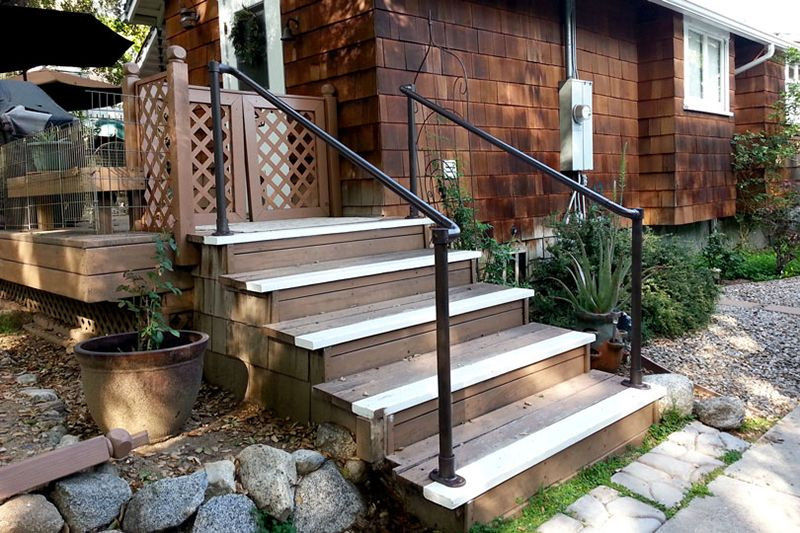
The ability to safely enter and exit the home is the foundation of independence. An elderly parent who struggles with front steps, heavy doors, or an uneven threshold at the entryway is at risk every single time they leave or return home — and may begin limiting their movement to avoid the risk, which accelerates physical decline.
Key access modifications include:
Wheelchair ramp installation — for steps at entry points, a properly constructed ramp eliminates the step risk entirely. Our home modification services include temporary wooden switchback ramps and permanent ramp construction for all entry configurations
Handrail addition or replacement — on both sides of any remaining steps, properly anchored to structural supports
Door threshold leveling — eliminating tripping hazards at interior and exterior door transitions
Door handle conversion from round knobs to lever handles — significantly easier for arthritic hands
Priority 3 — Staircase Safety

Stair falls are among the most serious fall injuries for older adults — the height of the fall and the hard edge of each step combine to produce severe injury outcomes. If your parent's home has stairs between living levels, and if they are showing any signs of difficulty or hesitation on stairs, this is an urgent safety priority.
Double handrail installation — a rail on both sides of the staircase at the correct height provides bilateral support throughout the entire stair movement
Stair lift installation — for situations where stairs cannot be avoided and physical ability to manage them safely has declined
Improved stair lighting — motion-activated lighting ensures the stair edge is clearly visible day and night
Contrast strips on step edges — high-visibility strips that help those with visual decline see the step edge clearly
The Financial Case for Acting Before a Fall Happens

Many families delay home modifications because of cost concerns. This is understandable — but the financial comparison between the cost of proactive home modification and the cost of a serious fall injury makes the case for early action overwhelming.
Home Modification | Typical Cost | Cost of NOT Acting |
Grab bar installation (bathroom) | $150–$500 installed | Hip fracture from bathroom fall: $30,000–$50,000+ in hospitalization and rehab |
Wheelchair ramp installation | $1,000–$3,000 | Stair fall: $15,000–$40,000+ emergency care; possible long-term care placement |
Stair lift installation | $2,500–$5,000 | Stair fall injury: $20,000–$60,000+; 20–30% one-year mortality rate for hip fractures in seniors |
Walk-in shower conversion | $3,000–$8,000 | Bathtub entry fall: hospitalization, possible nursing facility placement ($5,000–$10,000/month) |
Full home safety assessment | $0 — Free from Active Homes | Unidentified home hazards: average of 3–5 major risk factors found in each home assessed |
The pattern in this table is consistent: every home modification investment is a small fraction of the medical, rehabilitative, and long-term care costs that result from the fall it prevents. And beyond the financial cost, a serious fall frequently marks the end of independent living for an elderly parent — not temporarily, but permanently. Approximately one in three older adults who experience a hip fracture will not return to independent living afterward. The modification that costs $500 today may be the decision that determines whether your parent stays in their home for the next decade.
How to Have the Conversation With Your Elderly Parent About Home Safety
One of the most consistent challenges families face is not finding the right modifications — it's convincing an elderly parent to accept them. Resistance to home modification is common and understandable: for many older adults, the suggestion that their home needs safety changes feels like an implicit statement that they are no longer capable. The conversation matters as much as the modification.
What Tends to Work
Frame modifications as tools for independence, not signs of decline — 'this makes it possible for you to stay here safely' rather than 'this is because you're having trouble'
Involve them in every decision — what bar finish, which shower design, which ramp style. When people feel agency, they accept modifications more readily
Share the data — knowing that most senior falls happen in the bathroom, and that grab bars reduce bathroom fall risk significantly, often lands differently than a general 'I'm worried about you'
Start with small, low-resistance modifications — a handheld showerhead, better lighting, a new handrail. Small wins build trust and demonstrate that modifications do not look institutional
Bring in a professional for the assessment — sometimes an elderly parent will accept information from a certified specialist that they would dismiss from an adult child
What Active Homes Brings to This Conversation
Our free home assessment is not just a technical evaluation — it is a respectful conversation with the homeowner about what they want to be able to continue doing safely in their own home. We present modifications as tools that support their goals, not restrictions on their independence. Our certified aging in place specialists have had this conversation hundreds of times, and we bring both the clinical knowledge and the communication approach that makes it productive rather than confrontational.
What a Professional Home Safety Assessment Covers — And Why It's the Right Starting Point
Families who try to identify needed modifications on their own often miss 60 to 70 percent of the actual risk conditions in the home. Not because they aren't observant, but because identifying fall hazards requires specific clinical knowledge of how aging bodies move, where falls statistically occur, and which environmental features create risk that is not immediately obvious to an untrained observer.
A professional home safety assessment from Active Homes covers every area of the home systematically and produces a prioritized, actionable plan — not a general impression. Here is what our assessment includes:
Bathroom evaluation — every fixture, surface, and transition point assessed against fall risk and modification opportunity
Entry and access assessment — all entry points, steps, ramps, and pathways evaluated
Staircase inspection — rail presence, height, bilateral availability, lighting, and surface condition
Bedroom and living area review — furniture height, rug hazards, lighting levels, pathway clearances
Kitchen and utility area assessment — reach requirements, storage heights, surface conditions
Outdoor areas — walkways, steps, lighting, surface conditions
Written prioritized modification plan — ranked by urgency and impact, with estimated costs for each item
Our assessment is completely free. Call us at 855-924-7663 or visit aginginplacemods.com/contact to schedule. We serve Los Angeles County and surrounding areas.
Who Benefits From Aging in Place Home Modifications
Aging in place modifications are most commonly associated with seniors — but the benefits extend to a much broader group. At Active Homes, we have identified five groups who consistently benefit from adapting their home environment:
Older adults who want to age in place — the primary and most common recipient. Modifications allow continued safe, independent living in the home they know and love
Families who have adult children with disabilities — home modifications that improve accessibility benefit family members of all ages when disability is present
Adults with disabilities — whether from injury, illness, or congenital condition, home modifications reduce daily barriers and support functional independence
Baby Boomers planning ahead — proactive modification before decline begins is the most cost-effective approach, and creates a home that will serve the occupant through the full aging process
People recovering from surgery or injury — temporary or permanent modifications support safe recovery at home and reduce the need for institutional rehabilitation stays
If your family member falls into any of these categories, a free home assessment is the most valuable next step you can take. It takes one phone call and produces a clear, prioritized picture of what the home needs and what it will cost.
The Emotional Side of This Decision — What Families Often Feel
The practical case for home modification is clear. The emotional reality of making this decision is more complex. Adult children who are trying to help elderly parents stay independent at home are often managing a mix of concern, guilt, frustration, and grief — grief for a parent's changing capabilities, and sometimes grief for the role reversal that this period of life requires.
Our post on the emotional stress when an elderly parent falls at home addresses this dimension directly. What we want to say here is simpler: the decision to modify a home is an act of love, not a concession. It is choosing your parent's continued independence over the easier path of waiting until a crisis forces a different kind of decision. Families who make modifications proactively consistently report that it reduced their anxiety, reduced their parent's fear of movement in the home, and extended the time their parent was able to live independently — often by years.
How to Get Started — A Simple Three-Step Path
The process of modifying a home for an elderly parent does not need to be overwhelming. Here is the simplest path from worry to action:
Step 1 — Schedule a Free Home Safety Assessment
Call Active Homes at 855-924-7663 or submit a request at aginginplacemods.com/contact. Our certified aging in place specialist will visit the home, conduct a full assessment of every area, and provide a written prioritized modification plan at no cost.
Step 2 — Review the Plan and Choose Your Starting Point
Based on the assessment, you will receive a clear picture of which modifications carry the highest urgency and impact. Most families start with the bathroom — it is where risk is highest and where modifications produce the most immediate improvement in confidence and safety. We work within your timeline and your budget.
Step 3 — Professional Installation With No Hospital Look
Our installations are designed to be safe, ADA-compliant, and aesthetically appropriate — not institutional. We have helped transform bathrooms, entryways, and stairwells throughout Los Angeles County into spaces that look like part of the home, not a medical facility. Our clients consistently describe the result as giving their parent back a part of their home they had quietly started to fear. View our home modification services and resources for more information on what to expect.
Related Blog Posts:
Frequently Asked Questions
Q: What home modifications help elderly parents stay independent at home?
A: The most impactful modifications for helping elderly parents stay independent are: grab bar installation in the bathroom (at the toilet, shower, and tub entry), walk-in shower conversion to eliminate the tub threshold, wheelchair ramp installation at entry steps, handrail addition on both sides of staircases, and improved lighting throughout the home. These modifications address the highest-risk fall locations and directly support the movements that become most difficult with age. A free home safety assessment from Active Homes will identify which specific modifications your parent's home needs.
Q: How do I know when my elderly parent's home needs modifications?
A: Key warning signs include: holding walls or furniture for support while moving around, avoiding the bathroom or bathing less frequently, unexplained bruises or mentions of near-falls, difficulty on stairs or avoidance of upper floors, trouble getting up from low furniture or in and out of the car, and loose rugs or dim lighting throughout the home. Any of these signs indicates that the home's current configuration is no longer matched to your parent's physical needs and that a professional assessment is warranted.
Q: What is a certified aging in place specialist and why does it matter?
A: A certified aging in place specialist (CAPS) has received specialized training in the unique home safety needs of older adults and people with disabilities. This certification, offered through the National Association of Home Builders, covers the biomechanics of aging, fall prevention, accessibility standards, and home modification best practices. Working with a certified specialist ensures that modifications are evidence-based, correctly specified for the individual user, and installed to the standards required for genuine fall protection.
Q: How much do aging in place home modifications cost?
A: Costs vary significantly based on the type and scope of modifications needed. Grab bar installation typically runs $150 to $500 per bar, professionally installed. A wheelchair ramp costs $1,000 to $3,000 depending on the configuration. A walk-in shower conversion ranges from $3,000 to $8,000. A stair lift installation typically costs $2,500 to $5,000. The most important first step is a free home safety assessment from Active Homes, which provides a complete prioritized modification plan with cost estimates for every recommended item.
Q: Is a free home assessment really free?
A: Yes — Active Homes offers a completely free home safety assessment to families throughout Los Angeles County. Our certified aging in place specialist visits the home, evaluates every area for fall risk and accessibility barriers, and provides a written prioritized modification plan at no cost and with no obligation. Call us at 855-924-7663 or visit aginginplacemods.com/contact to schedule.
Q: What is aging in place and how do home modifications support it?
A: Aging in place means living safely, comfortably, and independently in one's own home as they grow older, without needing to move to a care facility. Home modifications support aging in place by adapting the physical environment to match the user's current capabilities — adding support where the body needs it, removing barriers that create fall risk, and improving accessibility throughout the home. Research consistently shows that adults who age in place in a properly modified home maintain better physical health, mental wellbeing, and quality of life than those who transition to institutional care.
Q: Can home modifications prevent falls?
A: Yes — research from the CDC and National Institutes of Health confirms that targeted home modifications significantly reduce fall rates among older adults. Grab bars in the bathroom reduce bathroom fall risk. Ramps eliminate stair fall risk at entry points. Improved lighting reduces tripping hazards in hallways and stairs. Non-slip flooring reduces slip risk in wet areas. No single modification eliminates all fall risk, but a comprehensive modification plan addressing the highest-priority hazards in a specific home produces measurable, clinically documented reductions in fall frequency and severity.
Q: Does Active Homes serve my area in Los Angeles County?
A: Active Homes serves families throughout Los Angeles County and surrounding areas. We offer free home assessments for all service areas. Call us at 855-924-7663 or email customersupport@aginginplacemods.com to confirm service availability in your area and schedule your free assessment. Visit aginginplacemods.com for more information about our services and resources.
References & Reputable Resources
Start With a Free Home Assessment — It Takes One Call
You don't need to figure out which modifications your parent's home needs on your own. Active Homes will come to the home, identify every safety risk, and give you a clear plan — at no cost. One assessment can tell you exactly what needs to change, in what order, and what it will cost. It is the most important first step you can take.
CALL NOW: 855-924-7663 (855-9AIPMOD) Request Your Free Assessment: aginginplacemods.com
customersupport@aginginplacemods.com | Serving Los Angeles County and surrounding areas |

Comments